
By Vishal Pathak
As COP31 approaches in Antalya, Türkiye, extreme heat deserves greater attention in climate adaptation, loss and damage, and financing discussions (UNFCCC, 2026). Unlike floods, heat often leaves little visible damage, yet its impacts are profound, affecting health, reducing working hours, lowering sales and weakining livelihoods. For informal workers and small enterprises across developing countries, these losses cam threaten household security and economic resilience.
Protecting small businesses means protecting national economies. In India, micro, small and medium enterprises (MSMEs) contribute 31.1% of GDP and 35.4% of manufacturing output (Government of India, Ministry of Finance, 2026). They sustain employment, local supply chains and community well-being. Many small businesses and workers from informal economy, however, have limited savings, insurance, cooling facilities or social protection. Heat-related health risks can quickly become livelihood losses.
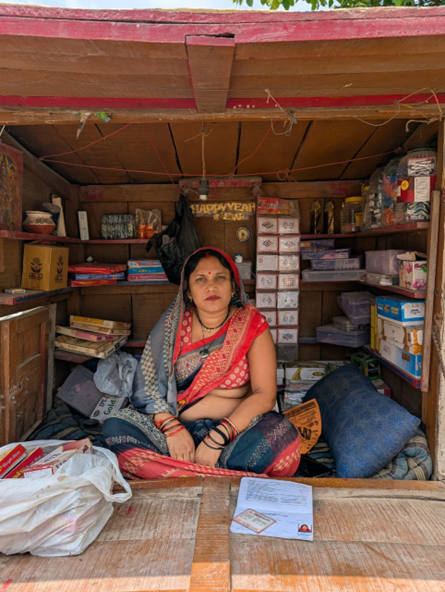
The risks are also cumulative. Following income losses during hot months, small businesses can face intense rainfall and flooding, damaged stock and prolonged closures. Ahmedabad’s July 2026 floods illustrate the need for protection against multiple hazards. The Gujarat government’s announced assistance and rehabilitation package for affected businesses is a welcome local response (The Times of India, 2026). Connecting recovery support with preparedness and financial protection could strengthen resilience.
daptation should lead, with risk financing as a complement. Shade, drinking water, safer working hours, accessible warnings and low-cost cooling can reduce exposure. Insurance cannot replace these measures, but suitable heat-linked products can provide timely cash support when predefined heat conditions are met.
AIDMI is building evidence through its Afat Vimo disaster insurance initiatives (AIDMI, 2025). In 2026, AIDMI also operated a separate heat-linked insurance pilot for small businesses across five Indian locations, with payouts triggered in May. These experiences can inform assessments of affordability, payout timeliness, inclusion and potential for scale. AIDMI is applying the lessons to explore heat-linked insurance options for small businesses in other geographical contexts.
Local experience is equally important. Through collaboration with the Avoidable Deaths Network (ADN) and the Ahmedabad Case Station for Avoidable Deaths due to Extreme Heat (ACaSA), AIDMI is bringing community perspectives on health, livelihoods and practical cooling solutions into research and action(Avoidable Deaths Network, n.d.).
India’s inclusion of heatwaves among nationally notified calamities under the disaster response funding framework for 2026–2031 is significant progress (Chitale, 2026). It creates an opportunity to connect finance with stronger heat preparedness and local action.
COP31 can build on these experiences by recognising heat-related economic and non-economic losses, financing locally led adaptation, strengthening social protection, and supporting appropriate insurance mechanisms alongside public investment. Protecting people who sustain local economies is an investment in public health, livelihoods and national resilience.
References:
All India Disaster Mitigation Institute (AIDMI) (2025) Risk Transfer and Insurance. Available at: https://aidmi.org/aidmis-risk-transfer-and-insurance/ (Accessed: 28 October 2026).
Avoidable Deaths Network (n.d.) ‘Ahmedabad Case Station for Avoidable Deaths due to Extreme Heat’. Available at: https://www.avoidable-deaths.net/adn-projects/ahmedabad-case-station-for-avoidable-deaths-due-to-extreme-heat/ (Accessed: 28 October 2026).
Chitale, V. (2026) ‘India unlocks disaster risk funds for heatwaves’, Nature India, 11 August. Available at: https://www.nature.com/articles/d44151-026-00155-0 (Accessed: 28 October 2026).
Government of India, Ministry of Finance (2026) Economic Survey 2025–2026: MSMEs Form the Backbone of India’s Industrial Economy. 29 January. Available at: https://www.pib.gov.in/PressReleasePage.aspx?PRID=2219984®=48&lang=2 (Accessed: 28 October 2026).
The Times of India (2026) ‘Gujarat Government Announces Relief Package for Flood Hit Small Businesses in Ahmedabad’, 9 August. Available at: https://timesofindia.indiatimes.com/city/ahmedabad/gujarat-government-announces-relief-package-for-flood-hit-small-businesses-in-ahmedabad/articleshow/133058417.cms (Accessed: 28 October 2026).
UNFCCC (2026) Joint Letter from the COP31 President-Designate of Negotiations. May 2026. Available at: https://unfccc.int/sites/default/files/resource/JOINT%20LETTER%20FROM%20COP31%20CPD-PON.pdf (Accessed: 28 October 2026).