
By Dr Maryam Samaila Mohammed
Every year, preventable deaths claim the lives of hundreds of thousands of women and girls from maternal complications to climate-related health crises (WHO, 2025). These deaths are not inevitable. They are the result of structural gaps in policy, financing, and leadership. As we mark International Women’s Day 2026 under the theme “Give to Gain,” we are reminded that investing in women is not charity, it is strategy (UN Women,2026).
Women are not merely beneficiaries of sustainable development; they are designing its blueprints.
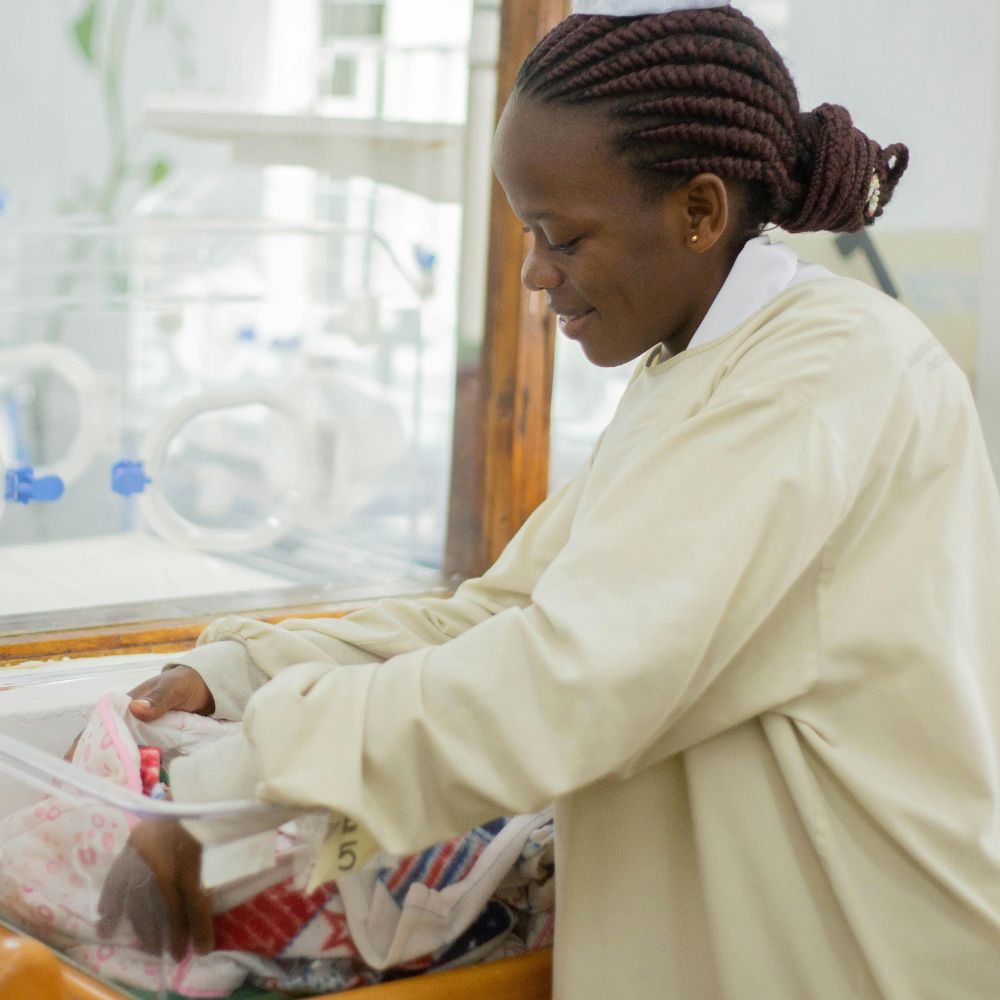
Across low- and middle-income countries, women anchor primary healthcare systems as midwives, nurses, and community health workers (MSF, 2024). They organize savings groups, monitor service delivery, and advocate for accountability. In doing so, they build the foundations of resilience long before external assistance arrives.
Yet women remain underrepresented in the rooms where budgets are allocated and policies are shaped (UNDP, 2025). Gender inequality persists through data gaps, underfunded reproductive health services, and limited decision-making power. The result is predictable: avoidable deaths continue where prevention should prevail.
To “Give to Gain” means recognizing that sustainable transformation requires structural investment in women’s leadership. When women participate meaningfully in disaster risk reduction planning, mortality decreases. When reproductive health services are integrated into climate and emergency preparedness, communities withstand shocks more effectively (Ray-Bennett et al, 2017). When women-led community initiatives receive financing, health systems become more responsive and equitable (Hemachandra et al, 2017).
To consider sustainability, five must-priority guide actions are to:
- Invest in gender-responsive data systems to identify and close mortality gaps.
- Fund women-led health and resilience initiatives at the community level.
- Guarantee women’s representation in governance and emergency decision-making.
- Integrate maternal and reproductive health into all crisis preparedness frameworks.
- Strengthen and elevate the female frontline health workforce.
The mission of the Avoidable Deaths Network is to prevent avoidable mortality across sectors (Ray-Bennett, 2018). Achieving this goal demands that we move beyond narratives of vulnerability and toward recognition of women as system architects. Sustainable futures are not built in isolation; they are constructed through inclusive leadership.
This International Women’s Day, the call is clear: Give power. Give resources. Give space at the table.
Because when women lead the change, everyone gains.
References
Médecins Sans Frontières (MSF) (2024) Women on the frontline: defying the consequences of conflict to care for each other. Available at: https://www.msf.org/women-frontline-defying-consequences-conflict-care-each-other (Accessed: 28 February 2026).
Ray‑Bennett, N. S. (2018). Avoidable deaths: A systems failure approach to disaster risk management. Springer.
Ray‑Bennett, N.S., Corsel, D.M.J., Goswami, N. & Bhuiyan, M.H. (2021) ‘RHCC intervention: strengthening the delivery and coverage of sexual and reproductive health care during floods in Bangladesh’, International Journal of Human Rights in Healthcare, 14(4), pp. 327–347. doi:10.1108/IJHRH‑08‑2020‑0078.
United Nations Development Programme (UNDP) (2025) Women leading crisis recovery and building resilience. Available at: https://www.undp.org/blog/women-leading-crisis-recovery-and-building-resilience (Accessed: 28 February 2026).
UN Women (2026) International Women’s Day. Available at: https://www.unwomen.org/en/get-involved/international-womens-day (Accessed: 28 February 2026).
World Health Organization (WHO) (2025) Maternal mortality – Fact sheet. Available at: https://www.who.int/news-room/fact-sheets/detail/maternal-mortality (Accessed: 28 February 2026).
Author’s short bio: Dr. Maryam Samaila Mohammed is a medical doctor with an MSc. In Risk, Crisis and Disaster Management. Her work sits at the intersection of health security, disaster risk reduction, and women’s empowerment in fragile settings.