
By Prof. Anil Gupta*; and Mr. Vishal Pathak**
Loss and damage from climate change are often discussed in terms of economic costs, infrastructure damage, and displacement. Yet one of the gravest and most irreversible forms of loss remains under-recognised: avoidable human deaths. During the International Awareness Day for Avoidable Deaths (IAD4AD), extreme heat demands urgent attention as a slow-onset disaster that is already claiming lives – quietly and repeatedly. The global campaign reminds us “Disaster Deaths Are Avoidable.”
Globally, direct disaster deaths are declining despite an increase in climate-related hazards. However, indirect disaster deaths and the number of people affected are rising. Heat-related illnesses, livelihood losses, and stress-related health impacts often occur beyond the immediate event. Understanding the “causes and circumstances” of such indirect deaths is essential to designing interventions that can save lives.
India has made important progress in recognising extreme heat as a serious public health and livelihood risk. The growing adoption of Heat Action Plans and the expanding role of the India Meteorological Department (IMD) reflect strong institutional leadership. Today, IMD provides up to seven days of advance heatwave forecasts – a significant scientific and governance achievement. This creates a powerful opportunity to reduce loss and damage not after impacts occur, but before harm begins.
Extreme heat deaths are rarely unpredictable. They occur when high temperatures intersect with exposure, unsafe working conditions, poverty, and lack of timely protection. Outdoor workers, informal vendors, elderly persons, and those living in poorly ventilated housing face the highest risks. When warnings do not translate into early action, heat stress escalates into illness, income loss, and, in the worst cases, death – fundamentally avoidable losses.
Anticipatory action is therefore central to reducing loss and damage. Early warnings, such as IMD’s 7-day forecasts, must function as decision triggers. When acted upon, they enable practical measures, such as adjusting work hours, ensuring water and shade, activating cooling spaces, strengthening outreach to high-risk groups, and preparing health services. These actions are affordable, evidence-based, and life-saving. AIDMI is working with over 3,000 small businesses across 11 cities in India to promote and strengthen the use of extreme heat early warning systems.
Initiatives such as the Ahmedabad Case Station for Avoidable Deaths due to Extreme Heat at AIDMI, within the Avoidable Deaths Network, show how local evidence can help convert forecasts into protection. They demonstrate that loss and damage are not unavoidable when risk is known and time exists to act.
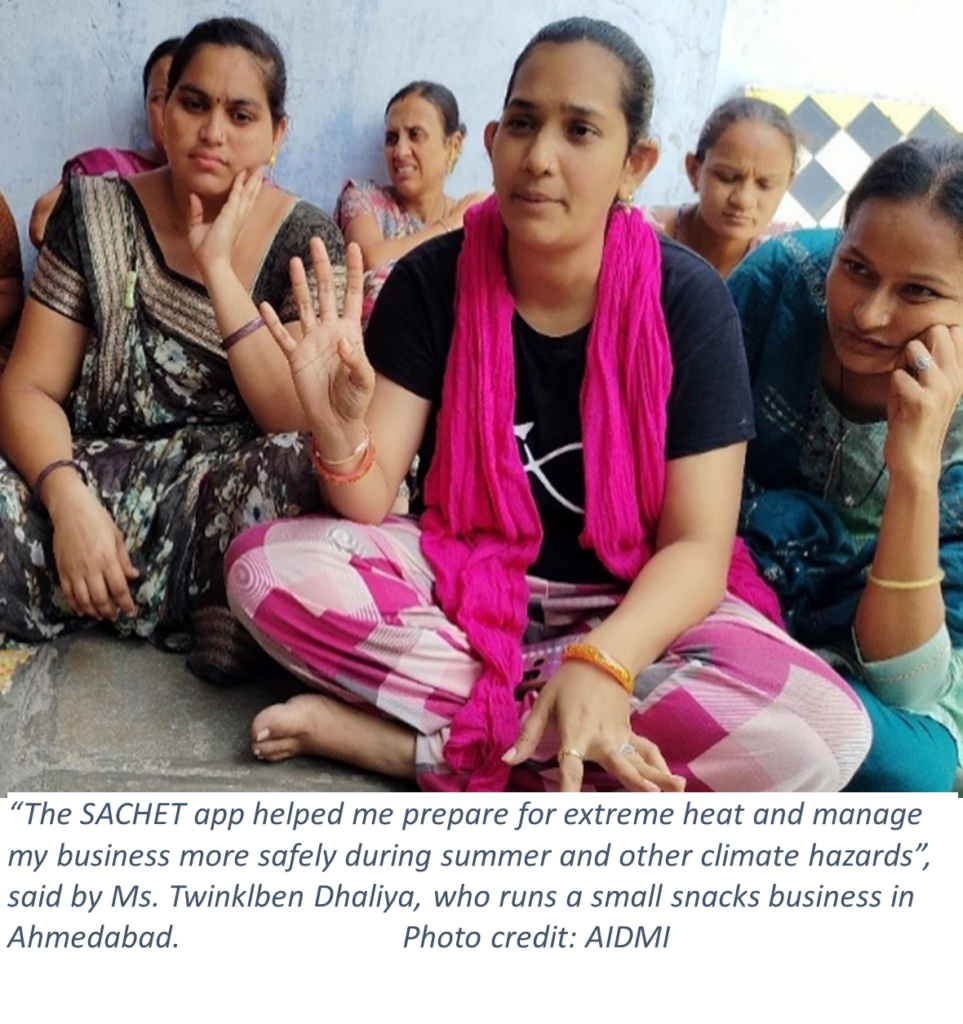
There is much to appreciate in India’s trajectory. The science is strong. Policies are evolving. The next step is strengthening last-mile implementation – ensuring that early warnings consistently translate into early protection for those most exposed.
__________________________________________________________________________________
About Authors:
* Prof. Anil Kumar Gupta, is a renowned resilience and sustainability strategist and DRR leader with extensive contributions to policy planning, capacity development, and climate change adaptation across agriculture, environment, health and urban systems. Currently, he leads the ICARS (Integrated Centre for Adaptation, Disaster Risk-Resilience and Sustainability) centre at IIT (Indian Institute of Technology) Roorkee, Greater Noida, India.
** Mr. Vishal Pathak studied social work and climate related risk in India and later at Switzerland, associated with AIDMI (All India Disaster Mitigation Institute) since last two decades and involved in different actions related to disaster risk reduction and climate resilience. Currently he is leading extreme heat adaptation work at eleven cities of India with various stakeholders.