

Maternal Deaths
By Prof. Nibedita S. Ray-Bennett, Dr Te Klangboonkrong, and Alex Skinner
Building on years of research into reproductive health (RH) in climate-related disasters and a success in prototyping the Facility and Mobile RH Kits in Bangladesh, Prof Nibedita Ray-Bennett and an international team of collaborators are now overcoming the challenges of making the Kits available in Low- and Middle-Income Countries (LMICs) worldwide.
The prototyping phase, funded by ESRC IAA, demonstrated the production feasibility of the innovative Facility and Mobile RH Kits and received strong positive feedback from experts in both technical and policy fields. Each kit includes essential medicines, equipment, consumables, and educational and instruction guidelines necessary for frontline treatment of incomplete or missed abortion and post-abortion complications (PAC) during disasters and crises, with provision for referral to secondary and tertiary healthcare facilities where needed.
Specifically for climate-related disasters in LMICs, such as cyclones, floods, and landslides, the Facility and Mobile RH Kits offer advantages over existing solutions (e.g., the UNFPA Kit 8). Both kits are designed to ensure regulatory compliance and enhance flexibility to accommodate different types of setups. The addition of a portable variant (Mobile RH Kit) is essential for service delivery in hard-to-reach areas, which are common in disaster situations. Further details on the prototype can be found here.
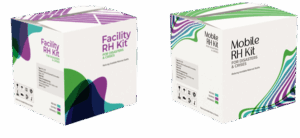
An important question remains, given the clear potential of the Kits: how could they be made available to those in need in a reliable, economical, and sustainable way? Prof. Ray-Bennett and her team have received support from the ESRC/AHRC SHAPE Catalyst through the ARC Accelerate programme (2025-2026). ARC Accelerate offers training, consultancy, and initial funding to explore the role the Kits could play globally, considering needs, production scaling, and a responsible, sustainable financial model for the Kits. More details on this phase are available on this page.
As a vehicle for this new chapter of the RH Kits, the Avoidable Deaths Lab (AD Lab) has been established in partnership with the Avoidable Deaths Network (ADN) and the University of Leicester to support the process. In its early stages, AD Lab has been developing collaborations with valued partners in healthcare, the humanitarian sector, and the pharmaceutical industry to bring the RH Kits closer to the global market.
On August 14, 2025, Prof. Nibedita S. Ray-Bennett secured a further grant from the ESRC-IAA to trial the efficacy of the Kits in Kulaura Upazila, Bangladesh. The trial of the Kits will begin in January 2026, with plans for additional grant applications to conduct trials in Nigeria and India.