
By Professor Alois Hirschmugl
Designing and Implementing Effective Disaster Response Training
Over the past decade, D.M.A.T. Consulting KG has organised a wide range of disaster response exercises worldwide, including in Albania, Austria, Bosnia and Herzegovina, Ghana, Jordan, Israel, Palestine and across the Caribbean. Several of these countries experienced actual disasters after the exercises. Authorities later emphasised how valuable the training had been, especially that the personnel understood better how to request international assistance, how to support incoming teams through a Reception and Departure Centre (RDC), how to manage international relief supplies, and how to effectively coordinate both national and international response teams.
This raises an important question: How can disaster response training and exercises be designed and implemented most effectively?
A Structured Approach to Disaster Response Training
Once the training objectives and target audience have been clearly defined, the process typically begins with discussion-based activities, such as seminars and thematic workshops. These sessions provide participants with an opportunity to exchange knowledge, review procedures, and establish a shared understanding of responsibilities and coordination mechanisms.
The next step often involves conducting a Tabletop Exercise (TTX). A TTX is a discussion-based simulation of an emergency scenario in which participants work through a situation using their existing plans and procedures. The scenario may be explored with or without time pressure, depending on the objectives of the exercise. Tabletop exercises strengthen problem-solving skills, highlight procedural gaps, and enhance coordination among participating services.
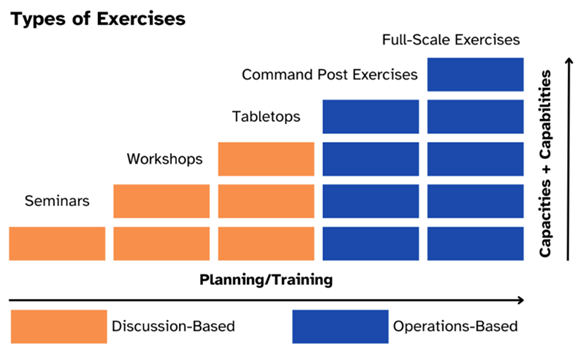
Figure 1: DG ECHO, Types of exercises. Source: compilation based on Homeland Security Exercise and Evaluation Program (HSEEP)
From Planning to Operational Simulation
After a TTX – where participants apply existing policies and plans to a simulated emergency – the training process typically moves to operations-based exercises.
The first of these is usually a Command Post Exercise (CPX). A CPX is a functional exercise that simulates field operations without deploying actual resources. Instead, headquarters, coordination centres, and command structures practice their real-world roles within their normal facilities. Such exercises test plans, procedures, communication systems, and decision-making processes, including the formal procedure for requesting international assistance when required.
Full-Scale Exercises: Training Under Realistic Conditions
The most advanced form of disaster preparedness exercise is the Full-Scale Exercise (FSX). Conducted in real time and under realistic and often stressful conditions, an FSX aims to replicate the complexity of real emergencies as closely as possible.
Major disasters frequently produce cascading effects – for example, an earthquake followed by heavy rainfall and landslides. Full-scale exercises simulate such developments through a structured scenario supported by injects covering the entire disaster response cycle.
Participants typically include national authorities, multiple operational agencies, and international response teams and organizations. Because of their scale and complexity, FSXs represent the closest possible approximation to real-world disaster response conditions and involve all relevant stakeholders.
Practical Example
A recent example is the EU MODEX AT exercise, conducted in October 2025, which demonstrated large-scale international disaster response coordination in practice:

The Importance of Continuous Preparedness
Continuous training and exercising benefit both emergency responders and the communities they serve. Effective disaster management requires that plans and procedures are developed in advance, regularly practiced, and continuously updated.
Every life is invaluable. Every life is precious.
Every life is invaluable. Every life is precious. For this reason, sustained training and realistic exercises are essential to reduce disaster-related fatalities, strengthen preparedness and build resilient societies capable of responding effectively to emergencies of any kind.
Author’s Short Bio
Professor Alois Hirschmugl is a Regular Officer, Trainer/Expert for international disaster management, and Technical Director of Disaster Management, Advice and Training (DMAT) Consulting KG. He is an ADN Advisory Board Member and is a Expert Member within the ADN Network on Loss and Damage.