

International Drowning Prevention Day Celebrations
By Mr Arkoneil Ghosh
Every year, drowning claims over 236,000 lives worldwide, making it one of the world’s most neglected causes of preventable death. This significant yet often overlooked danger disproportionately impacts children, the elderly, and communities in resource-limited settings, especially in low- and middle-income countries. The threat has worsened with climate change, with floods, unpredictable rainfall, and rising water levels causing more emergencies than ever before.
In recent years, several major floods influenced by climate change have highlighted the increased risk of drowning worldwide. The July 2025 Texas floods, which displaced thousands and submerged many areas of Texas county, in Uttarakhand, India, on 5 August 2025, a flash flood triggered by a cloudburst struck the village of Dharali in the Uttarkashi district. At least five people died, and over 50 remained missing, with many homes, hotels, and shops destroyed in the deluge. These disasters are not isolated incidents but warnings of a global crisis.
Despite recent major incidents and a record number of deaths reported worldwide, drowning remains under-prioritised in health and disaster policies. Most at-risk communities lack access to basic resources such as swimming lessons, flood alerts, or water safety education. Over 90% of drowning deaths occur in regions without these systems (WHO, 2024).
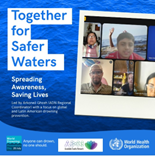
As part of the ADN’s Future Leaders Scheme, this year, I led a campaign for World Drowning Prevention Day 2025 with the World Health Organization (WHO) -endorsed theme: “Anyone can drown, no one should.”
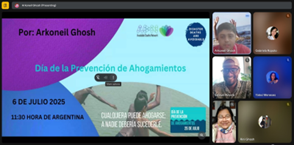 I organised a webinar on 6 July in Spanish, targeting youth audiences across Latin America. It included statistics, case studies, and video clips from the WHO, along with testimonies from community members. During the session, I emphasised a series of key prevention strategies:
 Swimming and water safety training, particularly for school-age children
- Supervision of recreational areas with lifeguards and clear signage.
- Barriers and fencing around residential water bodies.
- Early warning systems and zoning laws for flood-prone areas.
- CPR and first-aid training for caregivers and teachers
- Discouraging high-risk behaviours like swimming during the monsoon or in unfamiliar waters.
Participants described the event as “timely, informative, and engaging,” with several requesting repeat workshops for local schools and outreach.
As climate threats intensify, from cloudbursts to sea-level rise, drowning must be recognised not only as a health issue but also as an indicator of systemic vulnerability. Prevention is not just possible, it is urgent.
References
- ReliefWeb. “Situation Report 1: Uttarakhand Cloudburst and Flash Flood (Date: 06 August 2025, Time: 10:00 AM).” ReliefWeb, 6 Aug. 2025 https://reliefweb.int/report/india/situation-report-1-uttarakhand-cloudburst-and-flash-flood-date-06th-august-2025-time-1000am.
- United Nations Office for Disaster Risk Reduction (UNDRR). “Texas Flood 2025 Collection.” PreventionWeb, 2025, https://www.preventionweb.net/collections/usa-texas-flood-2025.
- World Health Organization (WHO). Global Report on Drowning: Preventing a Leading Killer. WHO, 2021, https://www.who.int/publications/i/item/9789241564786.
- World Health Organization (WHO). Drowning deaths decline globally but the most vulnerable remain at risk. WHO, 2024, https://www.who.int/news/item/13-12-2024-drowning-deaths-decline-globally-but-the-most-vulnerable-remain-at-risk