

Case Station for Avoidable Heatwave Deaths
By Mr Vishal Pathak and Prof. Nibedita S. Ray-Bennett
The All-India Disaster Mitigation Institute (AIDMI), in collaboration with the Avoidable Deaths Network (ADN), launched the Ahmedabad Case Station for Avoidable Deaths (ACaSA) on March 17 and 18, 2025. The ACaSA is a community-focused, community-led centre for research, training, and practical resources to support businesses in building heat resilience among socio-economically vulnerable groups, small businesses, and transport workers.
On 17 March, discussions centred on small businesses in Ahmedabad that face increasing operational and health challenges during the intense summer heat. Experts highlighted that heat-related illnesses and fatalities are largely preventable. Shared solutions included installing shade structures, improving ventilation, adjusting work hours, and ensuring access to hydration.
On 18 March, over 400 transport workers from the Ahmedabad Municipal Transport Service (AMTS) attended this event. These workers often endure long hours in extreme temperatures. AIDMI shared key strategies, including regular hydration, rest breaks, and access to cooling centres. The Mayor of Ahmedabad addressed the gathering, reaffirming the city’s commitment to climate resilience and worker safety. Special appreciation was extended to the Ahmedabad Municipal Corporation (AMC) for its ongoing leadership in combating extreme heat through proactive policies like the Heat Action Plan (HAP). AMC’s collaboration and continuous efforts play a vital role in safeguarding lives and enhancing community preparedness.
On 13 October, to mark the International Day for Disaster Risk Reduction (IDDRR), over 50 small businesses from Ahmedabad committed to taking preparedness actions against climate extreme events, particularly extreme heat, under ACASA. These small businesses are demonstrating how early action saves lives and livelihoods. Their local practices also show how avoidable deaths from extreme heat can be prevented through simple, low-cost measures.
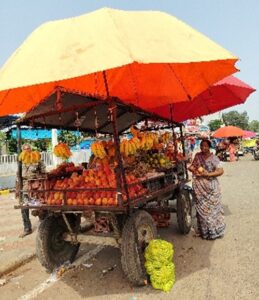
In the city’s narrow lanes and busy markets, adaptation is visible. Small businesses have installed shade nets, reflective sheets, and small fans; fruit sellers use insulated boxes to keep produce fresh; tailors and shopkeepers adjust their hours to avoid peak heat. Each of these small actions reduces exposure to heat stress, helping small businesses, transportation workers, and customers avoid illness, exhaustion, and potential heat-related health impacts. These modest investments—supported through AIDMI’s Climate Resilience Fund along with municipal planning and awareness campaigns—have reduced heat-related illnesses and prevented income loss.
ACASA’s team at AIDMI conducts field consultations that disseminate and build understanding on extreme heat early warnings, utilising IMD’s Mausam and NDMA’s SACHET apps to ensure alerts reach those most exposed.
One participant, a hosiery items seller, from the field consultation said:
“Earlier, we didn’t know about extreme heat early warning. After attending the training conducted in my own area, I learned how to take care of ourselves and our family members. Now, we regularly check the SACHET app for alerts and plan our day and week accordingly.”
For officials, these outcomes reinforce that proactive measures work better than relief. As one AMC officer mentioned:
“When people prepare together, the city becomes stronger.”
The action in Ahmedabad reflects constructive progress in disaster risk reduction. It demonstrates that when resilience is funded and inclusion is prioritised, avoidable deaths and losses from extreme heat can be prevented, hazards cannot turn into disasters, and development progress remains steady.
AIDMI, through ACASA, is putting forward a strong case that avoiding death is not a distant ideal—it is an achievable outcome of everyday preparedness. The prevention of avoidable deaths begins not after the storm, but in the ordinary, life-saving decisions of those who keep the city working.
You can read the full Highlight of the outreach events through this link: https://www.avoidable-deaths.net/adn-projects/ahmedabad-case-station-for-avoidable-deaths-due-to-extreme-heat/